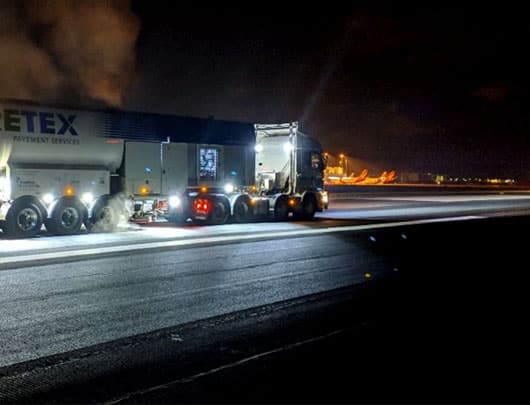
A three-hour night window on a live regional highway leaves zero room for error. When resurfacing schedules demand removing old lines before applying a new seal coat, site managers face strict operational limits. The work must fit inside one lane closure possession. The base asphalt cannot be scarred or rutted. All liquid waste must leave the site before morning traffic reopens. As Australia’s premier pavement services company, RETEX delivers nationwide operational coverage to solve these night shift constraints.
Standard mechanical grinding gouges base asphalt. This creates weak spots where water collects under new seals and compromises structural integrity. Uncalibrated hydro-blasting risks stripping fine aggregate from the road surface. Achieving a clean surface inside short night shifts requires a controlled, closed-loop approach.
Audio-tactile line marking removal: stripping profile lines without wrecking the new seal
Audio-tactile line marking uses thermoplastic profile lines and cold-applied rumble treatments built for heavy traffic loads. Removing these profiles cleanly is essential before applying new seal coats across regional road networks. Leaving profiles in place causes reflective cracking under new seals. Mechanical grinding leaves deep gouges that trap water and cause premature potholes.
Adjustable ultra-high-pressure water blasting resolves this trade-off. Directing micro-jets of water at calibrated pressures shears thermoplastic directly from the road surface. The hydraulic force breaks the bond at the interface without disturbing the asphalt course below.
Removal of profile lines follows five clear operational steps:
- Pavement assessment: Operators evaluate the asphalt mix, binder age, and road temperature to set baseline operational pressures.
- Pressure calibration: Calibrating the ultra-high-pressure system to the exact energy needed to lift line material while protecting underlying aggregate.
- Controlled pass: Moving the specialised blast head along the line path at a steady speed for consistent surface treatment.
- Vacuum recovery: Capturing water, bitumen fines, and line fragments at impact using high-airflow vacuum hoods built into the blast head.
- Surface inspection: Checking that the road is clean, dry, and structurally sound before reopening the lane to traffic.
This method protects base asphalt while hitting the production speed needed for highway night windows across major road corridors.
Stripping lines without tearing up the asphalt
Protecting road structure relies on keeping surface aggregate locked in place during line removal. Mechanical scarifying relies on impact force. On older asphalt or spray seals, this mechanical impact dislodges stone and creates holes that require extra patch repairs before resealing can take place.
Water blasting uses hydraulic shearing force instead. High-pressure water enters micro-voids between the line marking and the road, lifting the material away from the aggregate matrix.
Operators adjust system pressure based on road condition:
- Fresh asphalt: Higher water pressures lift dense thermoplastic materials cleanly without binder loss or surface deformation.
- Aged spray seals: Lower water pressures preserve stone retention on weathered road surfaces and prevent aggregate stripping.
Avoiding substrate damage removes the extra time and material costs of patch repairs. The road surface stays smooth, uniform, and ready for immediate tack coats.
Handling liquid waste when the sun goes down
Generating slurry on open carriageways creates safety hazards and environmental compliance risks for site crews. Specialised plant equipment integrates environmental wastewater recovery directly into the blast head assembly.
Vacuum suction pulls spent water, pulverised paint, and line solids out of the blast head at the point of impact. The captured slurry flows through suction hoses directly into heavy vehicle recovery tanks mounted on the service unit.
On-site waste handling meets three strict operational criteria:
- Zero surface residuals: Leaving pavement dry and clean for immediate inspection and rapid re-opening.
- Closed-loop containment: Keeping all liquid waste secured in certified onboard heavy vehicle tanks throughout the shift.
- Offsite waste transport: Transporting captured liquid waste offsite to an approved liquid waste disposal facility at shift end.
Combining removal and waste collection into a single pass eliminates extra sweeping trucks and keeps night work moving on schedule.
Fitting line removal into the bigger job
Line marking removal is one step in broader road maintenance, alongside pavement retexturing and surface profiling. Engaging a single provider with Australia-wide capability reduces project risk, contract administration overheads, and contractor delays.
When the crew handling audio-tactile line marking removal understands binder management and surface friction, civil engineers get better project results. Integrating controlled surface preparation ensures pavement assets reach their full design life. Review our August guide on line marking removal for operational standards to reference when structuring future contract scopes.