Removing line marking is rarely just about getting rid of paint. Whether you are realigning a highway intersection, prepping for resurfacing, or correcting an outdated layout, the method you choose determines what the pavement looks and performs like once the line is gone. Get it wrong and you are left with shadowing, scarring, or a surface that is not fit for the next stage of works. This guide walks through the roadline removal methods used on Australian roads and airfields, and what each one does to the surface underneath.
What methods are used to remove line marking from roads and airfields?
Four methods are used across Australian road and airfield projects: mechanical grinding, ultra-high-pressure (UHP) water blasting, shot blasting, and burning off. Each works differently, and each leaves a different result on the pavement once the marking is gone. The right choice depends on the substrate, the marking material, and what the surface needs to do next – not on which method is fastest or cheapest on paper.
Does grinding damage the road surface?
Grinding removes line marking effectively but does alter the surface it is applied to. Rotating abrasive or carbide-tipped heads cut through the marking and a thin layer of the pavement beneath it, which can leave a visible profile – sometimes called a ghost line – where the surface has been thinned or roughened. This scarring can be more pronounced on asphalt than concrete, and while it does not generally stop traffic returning to the area, it can be an issue where a clean, unmarked finish matters, such as ahead of resurfacing or on surfaces with a specified texture depth. Grinding also generates dust and debris, which needs to be contained and cleared as part of the works.
Does water blasting damage the pavement?
UHP water blasting is generally considered the gentler option for surfaces where preserving the existing texture and finish matters. The waterjet strips the marking material without cutting into the substrate the way mechanical methods do, so scarring is typically minimal and the underlying surface texture is more likely to remain intact. Surfaces are usually trafficable again once wet marks have cleared, though this depends on the site and specification. Waste management presents a key requirement: water blasting produces contaminated wastewater carrying paint or thermoplastic residue, which must be captured and disposed of through licensed waste processes rather than allowed to run off site.
Is shot blasting suitable for every surface?
Shot blasting is not a universal fit – it works by propelling small metal beads at the surface to chip away the marking, and the beads are vacuumed and recycled as the machine moves. It is most effective on concrete and struggles on thermoplastic markings, and it cannot be used on wet surfaces, which limits when and where it is viable. Like grinding, it can leave some surface scarring, though the debris and used shot are collected as part of the process rather than left on site, which simplifies the waste side of the job.
What about burning off?
Burning off, sometimes called thermal lancing, uses a blast of high-temperature compressed air to vaporise the marking material rather than cutting or blasting it away. It is a fast option and produces less dust than mechanical methods, but it generates significant heat and noise, and typically leaves a residue that needs cleaning before any new marking goes down. It is generally suited to bitumen surfaces rather than concrete, and less appropriate near sensitive sites or where noise and fume management are a concern.
Which method is right for your project?
There is no single best method – the right one depends on the substrate, the existing marking material, the finish the next stage of works requires, and the site’s traffic and environmental constraints. A concrete carpark being reconfigured has different requirements to an active highway realignment or an airfield taxiway, and the removal method needs to be matched to the specification, not chosen by default. This is a decision worth making with input from whoever is managing removal on site, since the wrong call can mean redoing preparation work before resurfacing or remarking can proceed.
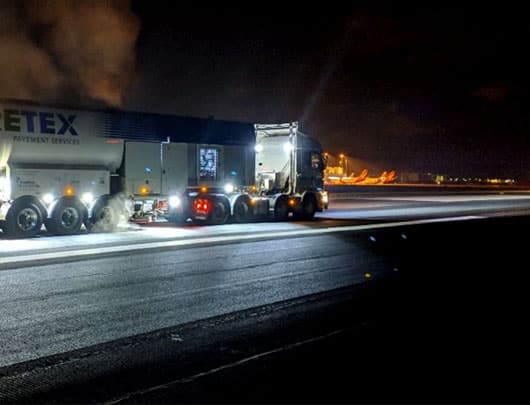
Working through a road or airfield project that needs line marking removed cleanly and to specification? RETEX’s roadline removal service applies UHP water blasting to achieve a clean finish with minimal scarring or residue, backed by project management that keeps the works on schedule. Get in touch to talk through your project.